Tuesday, August 11, 2009

Help raise money for Alzheimer's Disease!

Accera, Inc.'s new campaign, "Lost & Found," is an on-line initiative whereby each visit to www.lostandfoundcampaign.com prompts a $1 donation by Accera to support the Alzheimer's Foundation of American (AFA).

By simply selecting an icon representing something they have lost or forgotten that day, at no cost to individuals, the selection will trigger an Accera donation to AFA. The funds generated throughout this initiative will be donated to AFA on November 17, "National Memory Screening Day," to further AFA's efforts to support individuals with Alzheimer's disease their families.

National Memory Screening Day, an annual initiative sponsored by AFA, provides free, confidential memory screenings to individuals concerned about memory loss with the objective of early detection and intervention. Qualified healthcare professionals offer the face-to-face screenings at convenient locations in communities across the nation.

"Lost & Found" submissions will be accepted on-line through November 13, 2009.
(Accera, Inc. is a privately held commercial-stage biotechnology company that developed and now markets Axona in the US. Axona is a prescription-only medical food intended for the clinical dietary management of the metabolic processes associated with mild-to-moderate Alzheimer's disease.)

Monday, August 10, 2009

Happy birthday

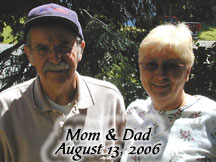
Today would have been my dad's 69th birthday. I hope wherever he is, he's happy.

Sunday, August 02, 2009

Terry Pratchett and assisted suicide

Terry Pratchett, a British fantasy author and one of my favorites, was diagnosed with Alzheimer's just days after my dad died.   He has given loads of money to research and been extremely outspoken with what is happening to him.   Now he says he wants to die in his garden, listening to his I-pod, on his own terms.
He says, "I live in hope - hope that before the disease in my brain finally wipes it clean, I can jump before I am pushed and drag my evil Nemesis to its doom, like Sherlock Holmes and Moriarty locked in combat as they go over the waterfall." 
When we put Nutter to sleep last September, I cried there at the vet's, my hand on his back, as the life went out of him.  But he was suffering and we loved him and it was the last gift we could give him.  How horrible to be denied that when it's a human you love and who is suffering.
Sir Terry says that 'right-to-die' campaigners trying to change the law on suicide are acting with 'furious sanity'. He calls for the creation of special tribunals run by coroners to establish that terminally ill patients who request assisted deaths are acting voluntarily.
Evidently they are trying to pass laws regulating assisted suicide (so it's not prosecuted as murder) and 75% of people polled agree that it's the right thing to do.
It's obvious to me, reading this long article by Sir Terry, that he still has wit and imagination plenty.
We would not walk away from a man being attacked by a monster, and if we couldn't get the ravening beast off him we might well conclude that some instant means of less painful death would be preferable before the monster ate him alive.
Terry Pratchett on assisted suicide
Screenprint of original article

Thursday, June 18, 2009

Trepanation as an Alzheimer's treatment?!

I found this rather baffling New Scientist article about how trepanation (drilling a hole in the skull to relieve pressure) may be a valid treatment for Alzheimer's and other forms of dementia.
Maybe it's because I'm not a scientist (new or otherwise) but I know my dad's brain was atrophied.  Tiny.  Did not fill his skull anymore.  And in fact, that is why he did not die sooner from his two bad falls-with-brain-injury because there was plenty of room for his injured brain to swell.  So I'm confused as to why venting someone's skull when their brain is already tiny is going to help.
(Yuri Moskalenko) is exploring the idea that people with Alzheimer's disease could be treated by drilling a hole in their skull. In fact, he is so convinced of the benefits of trepanation that he claims it may help anyone from their mid-40s onwards to slow or even reverse the process of age-related cognitive decline.
....
As we age, cerebral blood flow decreases, and the earlier this happens the more likely someone is to develop early onset dementia. It remains unclear, however, whether declining cerebral blood flow is the cause, or an incidental effect of a more fundamental change.
....
As we age, the proteins in the brain harden, preventing this system from working as it should. As a result, the flow of both blood and cerebrospinal fluid is reduced, impairing the delivery of oxygen and nutrients as well as the removal of waste. Moskalenko's research suggests that this normally begins between the ages of 40 and 50. Moreover, in a study of 42 elderly people with dementia, he found that the severity of their cognitive disorder was strongly correlated with cranial compliance: those with the severest dementia had the lowest compliance.
Ack.  I'm going to be 41 in a couple of weeks.  Do I need my skull ventilated?!
I guess I am too fixated on the brain atrophy part of Alzheimer's (not mentioned at all in the article) to understand how opening the skull would help fluid circulate.
trepanation treats Alzheimer's
image source=article source
screenprint of article

Thursday, May 28, 2009

18 Months since dad died

This week it's been 18 months since my dad died.  My mom came over yesterday for the yearly taming of my front yard (there's a couple of bushes that we cut down every year to the ground and they grow back bigger the next year).  We were talking about how my dad would have been helping us if he was there, carrying the brush to the compost pile in the back yard.  And even how my yard would never ever look neglected or overgrown if my grandpa (her father) was alive--he died a few weeks after my high school graduation, in 1987.   (My mom lost her dad when she was 42 and I didn't even make it to 40 before mine died.)
My mom said that she never thought she would miss my father so much.  The last few years, especially the last few months, he was mostly a burden.  I know that sounds awful....unless you're a caretaker and then you understand.  But now that the violent and confused Bob is gone, we can remember the real Bob, and miss him terribly.
I've been sad all week.  One of my birds died 3 weeks ago, unexpectedly.  Doing all the dead pet things--the crying drive to the vet, going back to pick up the ashes--made me miss my black cat Zen again--and realize that on August 1 it will be 3 years since he left me.  I still feel awful that I didn't say goodbye--I didn't know he was going to die before I ever saw him again--did he think I abandoned him and just give up in less than a day?
I'm reading a book about the conquest of Mexico--a topic that boils my blood.  The Mesoamericans believed in cyclical time.  Time loops around and we have a chance to do it all again:
"Another time it will be like this, another time things will be the same, some time, some place.  What happened a long time ago, and which no longer happens, will be again, it will be done again as it was in far-off times: those who now live, will live again, they will live again."