Wednesday, February 14, 2007

118 GPS shoes find the lost

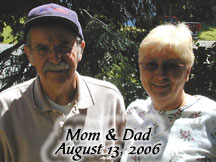
I believe I've already said that my dad a month or so ago peed in the hallway on the wall. Last week my mom caught him peeing on a different wall. She yelled at him and he went right into the bathroom and used the toilet.
The dog, for the first time since she's had him, peed in the house too. I lose my pee-everywhere cat and my mom gets a pee-everywhere husband.
This item was in the news a few days ago and is now getting more wide-spread coverage. A man has invented sneakers with built-in GPS circuitry. Unlike some of the other GPS things I've looked at, where you download the information which isn't "live", this is live GPS enabling you to locate people. The sneakers cost $325 plus $20/month to monitor them. You can activate the GPS by pushing a button on the shoe itself if you get lost (say, while hiking) or call in with a code word if you've lost your loved one (child, AD patient, etc). The web site is horrible, all Flash animation, very slow, hard to navigate (which is why I detest Flash).
Unfortunately, my dad, who was once obsessed with his green sneakers, has now abandoned them and will only wear his shoes. Everywhere. Even to bed. Plus he takes a triple wide which the GPS sneakers don't offer. My mom said he wouldn't wear them. I wouldn't give him the choice; I'd take away all his other footwear.
The next logical step, of course, is to be able to add the circuitry to ANY shoe, not just their brand. (They are coming out with a way to swap the GPS unit between various shoes of THEIR brand.) Actually, it's a bracelet, like my dad already has, with such a chip in it. Somewhere someone's got to be working on it.

Monday, January 15, 2007

117 AD "I don't even know who you are!" & news

A few weeks ago, my dad got out of bed to use the bathroom. It's 2-3 steps from the bedroom to the bathroom door. He peed on the wall in the hallway and went back to bed. Who knows what he was thinking?
This past Friday, my husband and I were both over there because something's wrong with my mom's computer and we were trying to fix it. All of us-dog, cat, mom, dad, me, hubby-were all downstairs. My husband was working on the computer, I was sitting next to him, my mom was sitting on the stairs and the dog was harassing the cat in the other room. My father picked up a folder labeled "driver's licenses" and started showing it. My mom caught a glimpse of what was inside-40 year old driver's licenses, including her original learner's permit. She was flabbergasted and asked my father where he got them. "That's my old license!"
He pulled the folder away. "I've had these since 1961!" (They didn't even KNOW each other in 1961.) She tried to explain that she didn't want it back, she just wanted to know where he got it. He clutched the folder like it was full of gold and yelled "I don't even know who you are!" right in my mother's face. She just sat there for a moment and then she said, "I know," and went upstairs. It was so awful, words can't describe it.
Then he came over to me and started saying how "they" always try to take all his stuff (meaning my mom) and said, "It's okay if YOU look," offering me the folder. I looked--I never saw a driver's license that old, basically just a typed piece of paper like an old-fashioned library card. My husband was just sitting there with his mouth hanging open like he couldn't believe what my dad had said. I said to my father, "You do know who she is. That's your wife. That's Ann."
"I know," he admitted, and took the folder back.

in the news:
Scientists identify Alzheimer's gene
A huge international study has identified a gene that apparently can raise the risk of developing the most common form of Alzheimer's disease, a discovery that may help scientists develop new treatments.
Scientists analyzed DNA from more than 6,000 people from a variety of ethnic groups and found evidence implicating certain versions of the gene, called SORL1.
It's too soon to tell how much those gene versions raise the risk of getting Alzheimer's, or what percentage of cases they account for, the researchers said.
They said the effect on risk appears to be modest.....
The study... focused on Alzheimer's that appears after age 65, the most common type.
Only one gene, called APOE, has been firmly linked to raising susceptibility to the common form. A Harvard-based group lists about 20 other genes it considers promising candidates, based on research.
...The new paper implicates SORL1 in Alzheimer's in two ways.
First, it shows that inheriting certain variants was associated with developing the disease in seven out of nine samples of people examined. The association appeared in African-American, Caribbean Hispanic, northern European and Israeli Arab groups.
In laboratory studies, researchers also found that when they suppressed the activity of SORL1, cells made greater amounts of amyloid beta, a substance thought to play a key role in causing Alzheimer's.
Researchers believe the disease-promoting variants of SORL1 act by suppressing the gene's activity.

Wednesday, January 10, 2007

116 in the news

Two news items. Nothing new for my dad; haven't seen him for a few days.
Higher Folate Levels May Lower Alzheimer's Risk
I find it interesting that this article came out this week, since it's National Folic Acid Awareness Week. (Do you think I can make it up? Here's a link to an article I just posted yesterday at work about it.)
People with higher levels of the nutrient folate from both diet and supplements may have a lower risk of Alzheimer's disease.
What about people who already have it? Does it help then?
Those with a higher intake of folate from both diet and supplements had a lower risk of Alzheimer's than other people in the study. However, neither dietary intake of folate nor supplements alone had an effect; only the two in combination appeared to produce a benefit.
The researchers found that higher folate intake was modestly associated with lower levels of the amino acid homocysteine in the blood. Elevated levels of homocysteine in the blood are associated with increased risk for cardiovascular disease and stroke and may also boost the risk for Alzheimer's disease.
That's interesting, because of course stroke is another cause of dementia.
(F)olate -- also known as folic acid -- works with vitamin B-12 and vitamin C to help the body digest and utilize proteins and to synthesize new proteins when they are needed. It's necessary for the production of red blood cells and the synthesis of DNA. Folic acid also helps with tissue growth and cell function. In addition, it helps to increase appetite when needed and stimulates the formation of digestive acids. Food sources of folate include beans and legumes; citrus fruits and juices; wheat bran and other whole grains; dark green leafy vegetables; poultry; pork; shellfish and liver.
So drink your OJ! Eat your spinach (as long as it's not bagged e-coli type spinach)!

Alzheimer gene kicks in only in old age
A gene that predisposes its carriers to Alzheimer's disease appears to kick in only in old age and has nothing to do with mental declines that are sometimes seen early in life, Australian researchers have found.....The gene, APOE4, does not appear active at all until very late in life.
How do I find out if I've got it? And what about the books and articles I've read which say that the degeneration of Alzheimer's starts as early as your 30's but you compensate for many years? I'm 38 and every time I forget something I think, damn it's starting already? Am I wrong to worry already?
Performance on all tests declined across age groups, a sign of normal cognitive aging. However, APOE4 did not affect performance at any age....The memory changes that occur from 20 to 60 do not seem to be connected to that (APOE4) at all. ...
Clear signs of Alzheimer's usually begin to show when a victim is in their 80s. While many researchers agree that APOE4 seems to be the predominant risk factor for Alzheimer's, it is not entirely clear how it causes the debilitating disease.
It may have a role in repair of nerve cells. When there is nerve damage, people with APOE4 version seem less able to repair and less resistant to a whole lot of diseases or damage to the brain.
Well, that really wasn't that illuminating, was it? And no where in the article did it say when the gene "kicks in" (like the headline implied). Very misleading.

Monday, January 08, 2007

115 "come on" and bit of med news

So much to say, so little time to write.
A few weeks ago I had the pleasure of going grocery shopping with my parents. We were coming back from somewhere and my mom needed to buy a few things to cook for the holiday.
Going shopping with my dad is like walking the dog. Every ten seconds, you have to say "come on, come on" and tug. I have joked that the dog must think his name is "come on" when he's being walked; well my dad must think that's his name while he's in Stop and Shop. He had to go to the bathroom (dad, not dog) and I had to wait outside for him, otherwise he couldn't find us. What happens when he starts to need help? Most places don't have family bathrooms.
I believe I already mentioned my grandmother getting taken to the emergency room for her "heart attack" which turned out to be a back spasm. The doctor noted a shadow on her lungs in the x-ray. My mom was worried about lung cancer (my grandpa smoked cigars) so she was going to bring my grandmother back in to get her lungs checked for that. But then my grandmother demanded to be taken to the hospital again and it turns out she has pneumonia. In fact, although it was the medi-quick place and not the emergency room, it was the same doctor! So she got antibiotics. My mother kept the appointment with the regular doctor and he switched my grandmother to a more powerful antibiotic. Then she had an allergic reaction and yup, you guessed it, had to be rushed to the emergency room. I stayed with my father for one of these (it was a Saturday--NYE/Eve). I tried to make him something nice for lunch. He wanted bread. I tried to put peanut butter on it. He wanted toast with butter. Then he almost set his eyebrows on fire leaning over the (pop up) toaster trying to see if the bread was ready. Pretty much he ignores me when I'm there, whether my mom's there or not. But when I'm leaving, he runs out and demands "when are you coming again?"
My grandmother's new thing is that she doesn't want my dad there when she goes to the doctor or the emergency room. This is a hardship to my mom who has to find someone (ie, me or her best friend) to stay with my dad. It's a lot easier for her to just bring him along. I don't know why my grandmother is acting like that. My mother said that my grandmother is going to have to start to call ME to take her to the doctor if she can't bring my dad, and my grandmother responded that "she doesn't care" (meaning me). I can't win.
So this is my life right now.

Medical news: they've found a source of stem-cells that doesn't require embryos. Can this mean that the President will actually start to allow research on new "lines" again?
Stem cell researchers reacted with enthusiasm and reservations to a report that scientists have found stem cells in amniotic fluid, a discovery that would allow them to sidestep the controversy over destroying embryos for research....(T)he stem cells they drew from amniotic fluid donated by pregnant women hold much the same promise as embryonic stem cells....the scientists still don't know exactly how many different cell types can be made from the stem cells found in amniotic fluid. The scientists said preliminary tests in patients are years away....The cells from amniotic fluid can clearly generate a broad range of important cell types, but they may not do as many tricks as embryonic stem cells....
The hallmark of human embryonic stem cells, which are created in the first days after conception, is the ability to turn into any of the more than 220 cell types that make up the human body. Researchers are hopeful they can train these primordial cells to repair damaged organs in need of healthy cells.
However, many people, including President Bush, oppose the destruction of embryos for any reason. The Bush administration has restricted federal funding for the embryo work since 2001, leading many scientists to search for alternative stem cell sources.
This, like so many other things, won't help my dad, but it will help someone else's loved one.

Thursday, December 21, 2006

114 medical news round-up--lots o' new info!

One thing I didn't mention in my last post. When my mom finally got home from the hospital, my dad just kept hugging her and wouldn't let her go. Not like a husband who loves and misses his beloved wife, but like a child who lost his mother. So sad. He understands that he is completely dependent on her. And "that girl" of course, whoever she is.

New chemical gives insight into Alzheimer's
A chemical designed by doctors in Los Angeles could give unprecedented insight into the ravages of Alzheimer's disease and provide a new way to test for treatments....Previously the only way to determine if a person suffers from the devastating brain ailment has been to remove some brain tissue or with an autopsy.
The new study by doctors at the University of California, Los Angeles, is part of a larger quest to find a better method to diagnose the condition using tracers that can be detected with a positron emission tomography, or PET, scan.
The chemical, known as FDDNP, attaches to the abnormal clumps of proteins called amyloid plaques and tau tangles that develop in Alzheimer's sufferers and inhibit messages being processed by the brain.....
It was 98 percent accurate in determining the difference between Alzheimer's and mild cognitive impairment.That was far better than the 87 percent success rate for a PET scan test that measured sugar metabolism in the brain, and the 62 percent accuracy rate when doctors used a magnetic resonance imaging scan to gauge brain deterioration....
Finding an easier way to track brain deterioration not only would help doctors diagnose the disease, it could become easier to assess experimental Alzheimer's treatments, as researchers try to prevent the accumulation of plaques and tangles, or to reduce them if they accumulate.
That's exactly what the study my dad's in is trying to do. Too bad this technology wasn't already available. They could be doing this instead of all those MRI's and mental tests. What a great boon this will be both to research and to those fearing they have the disease.


Possible Alzheimer's fingerprint found
Scientists appear to have found a fingerprint of Alzheimer's disease lurking in patients' spinal fluid, a step toward a long-awaited test for the memory-robbing disease that today can be diagnosed definitively only at autopsy. Researchers ... discovered a pattern of 23 proteins floating in spinal fluid that, in very preliminary testing, seems to identify Alzheimer's — not perfectly, but with pretty good accuracy.
Far more research is needed before doctors could try spinal-tap tests in people worried they have Alzheimer's, specialists caution....
Scientists believe that Alzheimer's begins its insidious brain attack years, even decades, before forgetfulness appears — and if so, there should be evidence of those changes in the spinal fluid.

It's great that everyone's going for early diagnosis....but there's still no damn cure, still no REAL treatment that halts the progress or reverses the damage.


And like a wish granted, this article was posted in the last few minutes, as I wrote:
Potential Alzheimer's Disease Treatment Discovered
An antibody with the potential to block production of the brain chemical linked to Alzheimer's disease has been developed by researchers at Cardiff University in Wales, UK. The research is published today in the Journal of Alzheimer's Disease... The results of the study show that it is possible to decrease production of a small protein called *-amyloid (A*), which is believed to
be the main cause of the disease. Deposits of A* build up in the brain, preventing it from functioning properly. The team has developed an antibody that binds to a naturally occurring
protein in the brain, amyloid precursor protein (APP), preventing the production of A*. The antibody blocks the access to APP of an enzyme, b-secretase, crucial for the formation of Ab....
(I)t is possible that (this) antibody could be used as a preventative treatment to protect people at high risk of Alzheimer's Disease through their family history or other factors... The team believes that a form of the antibody could be used as a treatment to reduce A* build-up in the brain, improving the patient's memory and quality of life.
Some scary science stuff in there (well, not scary, just unknown to me). But it sounds interesting. I wonder if the "vaccine" they pour into my dad's veins works on the same principle?


Intellectual activity and not a pill, best therapy for Alzheimer's
Modest neuroprotective effects caused by education and intellectual activity at the cellular level may lead to dramatic reductions in the number of cases of Alzheimer's....The study suggests that the most effective neuroprotective therapy for Alzheimer's disease may be education and intellectual activity, and not a pill.
The researchers say that mounting evidence accumulated over the last few years support the notion that intellectual activity increases what neuroscientists call "the cognitive reserve".
According to the model, a mere five per cent increase in the cognitive reserve in the general population may prevent one third of Alzheimer's cases.
So all those dumb matching and video games I play might someday save my brain? All the reading and writing and art? God, I hope so.


S. Korean scientists find key factor in formation of Alzheimer's

A team of South Korean scientists said Wednesday they have discovered a crucial factor in the formation of Alzheimer's disease, a finding likely to help develop a treatment for the neuro-degenerative disorder...The team...discovered that the density of PIP2, a type of an organic compound forming the base of brain cells, plays a crucial part in the inherited form of the disease....The familial type is known to be formed from an overflow of proteins called beta amyloid in brain cells among people with mutated presenilin, another protein. However, scientists in the past could not find the correlation between the two proteins.
The team discovered that the density of PIP2 plays a key role in controlling the level of the two proteins, and that mutations of presenilin led to an increase in PIP2 density, while an artificial increase in the PIP2 density caused a fall in beta amyloids...(A) cure for the disease could be produced when and if we figure out how to control the concentration of PIP2.
More science. I wish I understood it better.

Testosterone 'could prevent' Alzheimer's
Men with higher levels of the hormone testosterone could be more resistant to Alzheimer's disease, a new study claims.
US scientists say they have discovered a direct link between a lack of the male hormone and the onset of similar neurodegenerative diseases in mice.
That's pretty straight forward. And testosterone is already an approved drug. What's the hold-up? It can't HURT can it?


Nebulous:
Pomegranate Juice May Thwart Onset of Alzheimer's
If you opt for a glass of pomegranate juice, you may be staving off Alzheimer's disease...pomegranates, when compared to other fruits and vegetables, pack notably high levels of polyphenols. Polyphenols, according to researchers, are one of many antioxidants known to neutralize the harmful effects of free radicals, which attack healthy human cells and cause them to mutate into cancer cells. Free radicals have also been linked to triggering arthritis, atherosclerosis, diabetes, premature aging, and Alzheimer's disease.

Sounds good...and pomegranate juice is yummy enough...


Stem cell Alzheimer's treatment discovered
Scientists have discovered a new treatment for people suffering from diseases including Alzheimer's, dementia and depression involving stimulating the brain to produce more nerve cells.
Starts out good, but then it never really says anything, including how stem cells can help. I'm leaving it in because it's Yule and I feel generous.

Anyway, that's all news from the last COUPLE of days. Amazing.